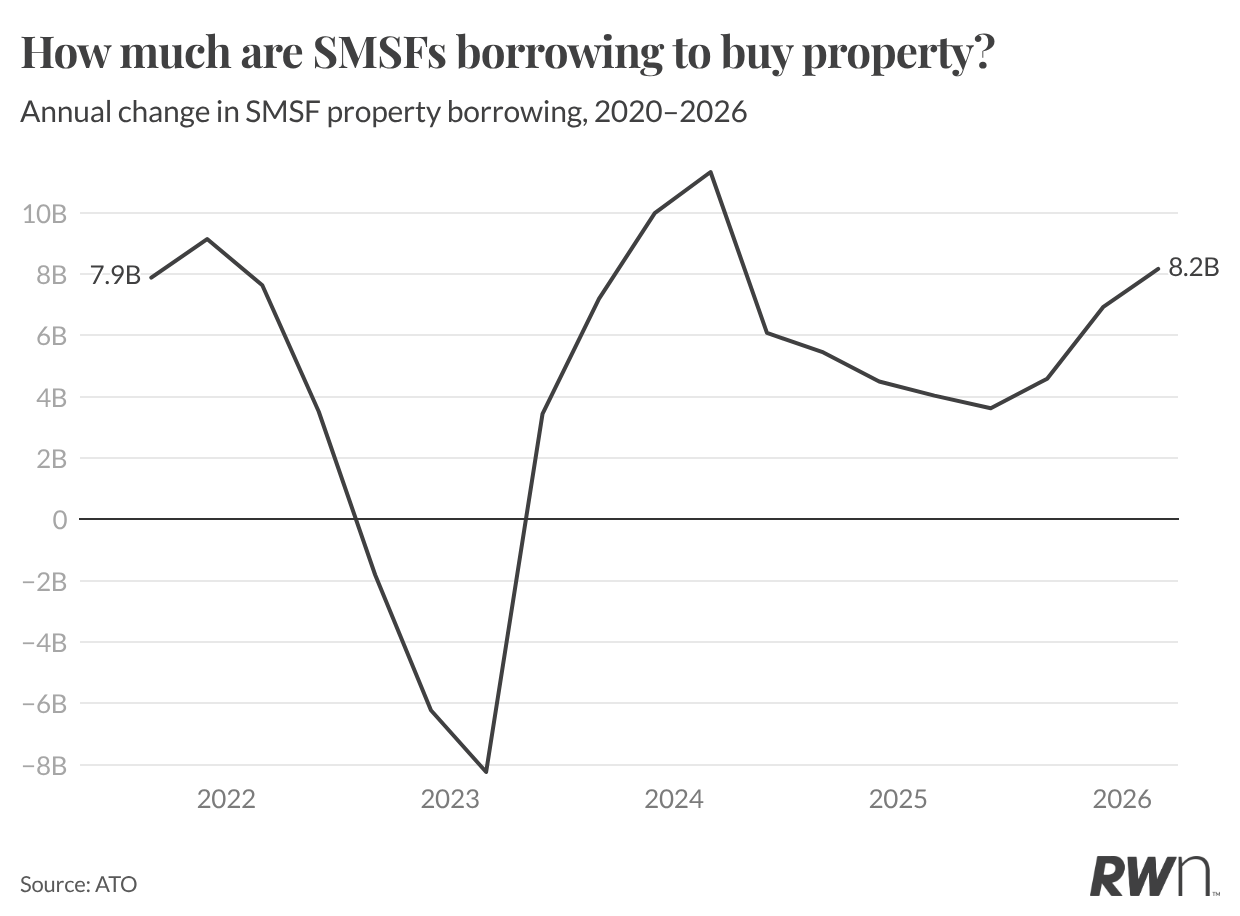
The federal government’s ban on SMSFs borrowing to buy residential property has been presented as a relatively small change. Existing arrangements are protected, commercial property borrowing is unaffected, and ATO data suggests new SMSF residential borrowing represents only a small share of total investor activity. But the size of the policy in the official data is not the only issue. The more important question is what role these buyers play in getting new housing projects funded.
Treasury’s estimate is based on ATO data showing the number of new limited recourse borrowing arrangements reported by SMSFs each year. On that basis, the government says there were around 4,300 new arrangements in 2024 and about 4,000 a year on average over the previous eight years. This is consistent with the formal SMSF borrowing data.
Developers are making a different point. An AFR article this week reported that property industry groups believe Treasury has understated the role SMSF buyers play in new housing, with eight investment and project marketing groups saying they alone processed more than 4,000 SMSF residential loans over the past year.
The likely difference is that Treasury is counting formal borrowing arrangements once they show up in tax data. Developers are looking at buyer demand much earlier in the process. An SMSF buyer may sign a contract and help a project meet its pre-sale hurdle well before the dwelling is completed and before the borrowing arrangement is reflected in ATO data.
This is where the policy risk becomes much larger than the headline SMSF borrowing numbers suggest. New housing supply does not begin at settlement. It begins when a developer is trying to prove to a lender that enough buyers are committed for the project to proceed. For larger apartment projects, pre-sales are often the difference between a project receiving construction finance or remaining stuck on paper. If one buyer group is removed from that early stage, the impact is not limited to the individual purchase. It can affect whether the entire project starts, how many dwellings are delivered and how quickly new rental supply reaches the market.
This is why a buyer group can be small in national lending data but still important to new housing delivery. SMSF buyers are not spread evenly across the market. They are more likely to appear in specific types of stock: new apartments, townhouses, house-and-land packages and investor-oriented dwellings at lower price points. These are also the projects where pre-sales can be hardest to achieve when investor demand is weak.
SMSF borrowing is not large enough to shift the whole housing market immediately. The problem is that banning it for new residential property removes another source of early-stage demand from projects that are already difficult to make work.
This means the supply impact could be larger than the loss of around 4,000 SMSF loans a year. If those buyers help projects reach the pre-sale thresholds needed for construction finance, removing them can affect more than the individual dwelling they would have purchased. It can delay or reduce entire projects. That is the risk. Australia already needs to build far more homes than it is currently delivering. At a time when housing supply is the central constraint in the market, policy should be making new projects easier to finance, not harder.